You don’t expect there to be asbestos in your house. Not in the walls, the floor, or the roof space.
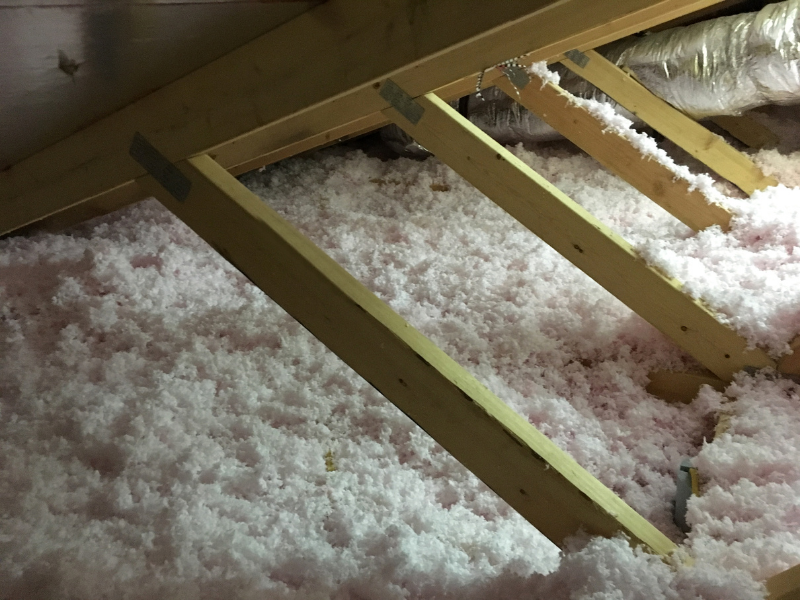
But it’s there, printed in a neat line on the surveyor’s report—asbestos suspected in ceiling panels, insulation debris noted in loft area.
There’s a moment of stillness after you read it. Followed, usually, by a burst of anxiety.
What does this mean? Is the house unsafe? Should you leave? Can the planned refurbishment work still go ahead?
The instinct is to move quickly. But this is one of those times when careful steps matter more than speed.
Start with the facts
Asbestos is not an immediate danger unless it’s damaged or disturbed. If it’s intact and left alone, the fibres that cause harm stay locked in place.
So you don’t need to panic. You don’t need to leave the house. You just need to stop and think clearly.
Most asbestos found in UK homes was installed before the late 1980s. It might be in old textured coatings, cement boards, even floor tiles. If you’ve had a survey done—especially for a planned renovation or sale—then chances are the discovery came from an asbestos-specific check. And that’s good. You found it before you touched it.
Stop any planned works
This is the hard bit. You were probably gearing up for something—renovation, rewiring, a loft conversion, or a bit of structural repair.
Now it all needs to pause.
If asbestos is present in an area that was going to be disturbed, that work cannot start until a licensed contractor has assessed and dealt with it.
Do not drill, cut, or remove anything that might contain it. Even a small release of dust can linger.
Call a professional
You need an asbestos removal or management firm. Not a general builder. Not a handyman.
These contractors are trained. Licensed. Insured. They’ll carry out a proper inspection, usually a refurbishment and demolition survey, to see how widespread the material is. They’ll take samples, get them tested, and tell you exactly what’s there.
They’ll then give you a written report. It might recommend removal, or in some cases, encapsulation—sealing the material so fibres can’t escape.
Either way, you’re not left guessing. You get clear steps.
The work itself
If removal is needed, it will be done under strict conditions.
The area is sealed. Workers wear protective gear. Air monitoring is used. Waste is bagged and sent to specialist facilities.
You don’t need to see this. But it’s worth knowing that it happens quietly, cleanly, and without fuss—provided you’ve hired the right people.
Once done, you’ll receive a clearance certificate. That’s your green light to carry on with your original plans.
If you’re buying or selling
If asbestos is found during a house purchase, it’s rarely a deal-breaker—but it does affect decisions.
The buyer might renegotiate the price. The seller might be asked to arrange removal before completion. Or both parties may agree to leave it in place, if it’s stable and well managed.
It’s not unusual. Asbestos is still present in thousands of UK homes. What matters is how it’s handled.
Cost and time
This isn’t free, and it isn’t instant.
But ignoring asbestos or trying to work around it is dangerous—and illegal. So budget for the time and money needed.
Small removals (like a few metres of pipe insulation) might cost a few hundred pounds. Larger jobs involving ceilings or loft insulation could run into the thousands.
The delay might feel frustrating. But the alternative is far worse.
Peace of mind
What throws people most is the word itself. Asbestos has a heavy history. It brings to mind illness, court cases, long-latent dangers.
But context matters. You found it early. You’ve stopped work. You’ve called in the right people.
This is not a disaster. It’s a detour.
And once the job is done, you don’t just carry on—you carry on knowing the risk is gone.
Clear Steps
If asbestos turns up in your survey, take it seriously—but don’t let fear take the lead.
The steps are clear. The work is safe in trained hands. And once it’s dealt with, it stays dealt with.
If you need help, advice, or a second opinion—we’re here for that. We’ve seen every type of asbestos issue, in every type of home.
Contact our team. We’ll talk you through it, and make sure you’re not stuck worrying about what to do next.