- Covering the South East: London, Essex and Kent

Home » Asbestos Surveys » Asbestos Refurbishment Surveys
Get Free Asbestos Survey Quote
An Asbestos Refurbishment and Demolition Survey is a legal requirement before any major refurbishment or demolition work takes place. If you plan to renovate part of a building, this survey is necessary for the areas being worked on. If the entire property is being demolished, then a full asbestos demolition survey is required.
This survey aims to identify and locate all asbestos-containing materials (ACMs) so they can be removed safely before any work begins. This type of survey is highly intrusive because asbestos is often hidden within walls, ceilings, pipework, and insulation. It involves destructive inspection, and in some cases, asbestos fibres may be disturbed. This is why all surveyed areas must be vacated during the process. Afterwards, the site must be certified as safe for reoccupation before any work can continue.
This survey plays a vital role in ensuring safety and compliance. Without one, construction workers and contractors could unknowingly disturb asbestos, leading to serious health hazards.
The survey ensures that no one is harmed by asbestos exposure while work is being carried out. By identifying asbestos in advance, it allows for proper removal or containment before any refurbishment or demolition begins. It also ensures that licensed professionals complete all asbestos-related work following strict safety procedures.
Conducting a proper asbestos survey can result in project delays, legal penalties, and unexpected costs. If asbestos is found midway through construction, work may need to be halted, leading to financial losses and potential fines for non-compliance with UK asbestos regulations.
By identifying asbestos materials before work starts, you can avoid costly surprises and ensure that your project runs smoothly from start to finish.
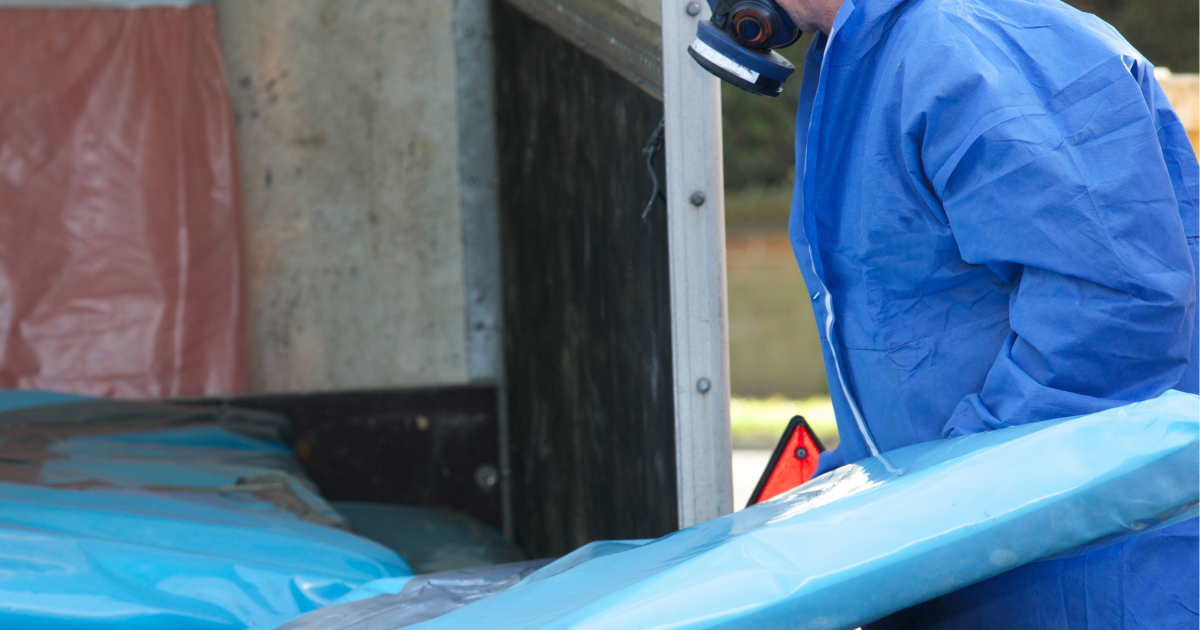
During an Asbestos Refurbishment and Demolition Survey, we commonly find asbestos in various building materials.
One of the most frequent locations is asbestos sheets, which are often hidden inside heater cupboards, partition walls, and insulation boards. Many older buildings also contain asbestos cement, which was used for external cladding and roofing. Asbestos can also be found in drainage systems, particularly in old cement pipes and downpipes.
Since asbestos was widely used in construction before its dangers were fully understood, it can be present in many unexpected places. Ceiling coverings, floor tiles, cement water tanks, and even old adhesive products may contain asbestos. This is why a thorough, intrusive survey is essential before any major renovation or demolition work begins.
If asbestos is identified during the survey, we will provide guidance on the next steps. In most cases, ACMs must be safely removed and disposed of by licensed professionals before any further work can proceed.
Once our team has completed the asbestos refurbishment and demolition survey, you will receive a comprehensive report detailing our findings. This report will include:
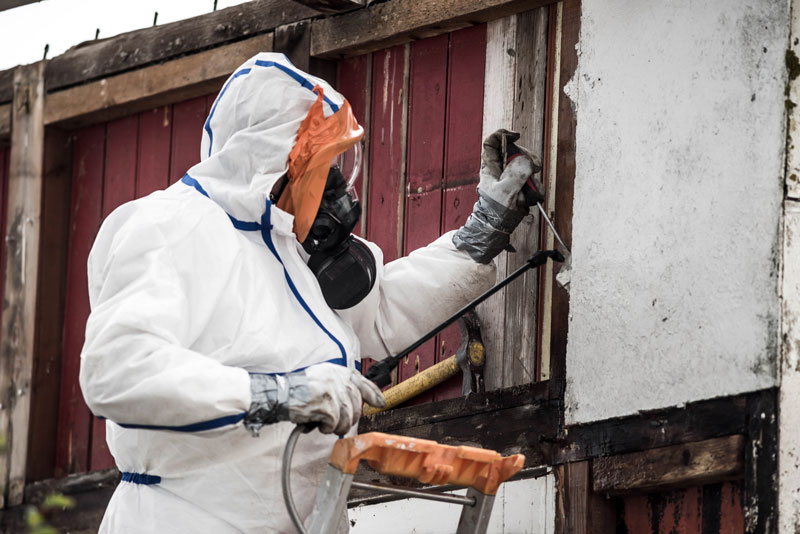
The exact location of any asbestos-containing materials and any asbestos debris found.
The type and extent of asbestos present in the property.
Professional recommendations on the safest way to remove or manage the asbestos.
This type of survey is required before any work that may disturb the structure of a building. Its purpose is to find all asbestos-containing materials (ACMs) in areas where refurbishment or demolition will take place.
The survey is fully intrusive and involves physically opening up walls, ceilings, and floors to look for hidden materials. Any suspect materials are sampled and sent to a lab for analysis. The results are used to make sure asbestos is dealt with properly before building work begins. This protects workers, building occupants, and the public from exposure.
You’ll need this survey before any building work that involves tearing down, altering, or refurbishing a structure built before the year 2000.
This includes home renovations, shop refits, or knocking through walls. Even small-scale work like replacing ceilings or removing internal walls require a survey if there’s a chance of disturbing the building fabric. The law says you must identify and safely handle asbestos before any type of work goes ahead.
A management survey is used for day-to-day occupation and maintenance. It involves checking areas with little disruption. A refurbishment or demolition survey is much more invasive. Surveyors may need to cut holes in walls, pull up floorboards, or break into ceilings to check what’s behind. The goal is to find every possible instance of asbestos in the areas affected by planned work.
Before the survey begins, we will ask for plans or details of the work you intend to carry out. We’ll identify which areas of the building will be affected, so we know where to inspect. This helps avoid unnecessary disruption and keeps the survey focused on relevant areas. Risk assessments and safe access plans are also prepared at this stage.
Very. The surveyor may need to break into parts of the building to find hidden ACMs. This includes removing parts of ceilings, walls, or floors.
Areas behind tiles, in lofts, or within ducting may also be checked. The aim is to uncover anything that could be missed in a surface-level check.
Yes. Because of the disturbance caused and the risk of releasing asbestos fibres, nobody can remain in the area during the survey. Once it’s finished, the area must be cleaned and cleared before people can safely return. In some cases, a reoccupation certificate may be needed.
If materials are suspected of containing asbestos, a small sample will be taken and sealed in a special container. These are then sent to a laboratory for testing. The lab will confirm whether asbestos is present and, if so, what type. This information is necessary for planning removal.
Yes. This survey is designed to find asbestos in hard-to-reach places. That includes behind walls, under floors, above ceilings, and in service ducts. Surveyors are trained to work carefully but thoroughly to identify anything that might be disturbed by future building work.
The report will include detailed findings from the site inspection and lab analysis. You’ll see a list of all identified ACMs, their locations, condition, risk rating, and suggested action.
The report will include marked floorplans and photographs showing where samples were taken. This document helps you plan the next steps safely.
If asbestos is found, the report will advise on what needs to happen before work can continue. Often, removal will be recommended. In some cases, the material may be sealed or protected if it won’t be disturbed. Either way, work cannot begin until the asbestos has been dealt with correctly.
Only experienced, qualified surveyors should carry out this type of survey. They must understand the risks and know how to work safely. It’s important to use a company like AJC Environmental that follows government guidance (HSG264) and has a solid track record of carrying out this type of work.
Yes. You should always use a UKAS-accredited surveyor. This means the company has been checked and approved to meet high standards of safety and accuracy. Many contractors and local authorities will only accept survey reports from UKAS-accredited firms.
If possible, you should provide building plans, details of the work planned, and access to all areas to be inspected. Any fragile areas, unsafe structures, or restricted spaces should be flagged in advance. This helps the surveyor prepare properly and avoid damage or delays.
Yes. If the planned work is only in certain parts of the building, the survey can be limited to those areas. It’s important to tell the surveyor exactly where work will take place so they can focus on the right zones.
There’s no fixed expiry date, but the report reflects the state of the building at the time of inspection. If the building changes or more work is planned later, another survey could be needed. Reports are typically considered valid for 12 months if conditions stay the same.
This depends on the size and structure of the building. A small area may take a few hours, while a larger or older site may take weeks or even months. If access is limited or there are lots of hidden areas, the job will take longer.
The survey process follows strict safety rules to protect the surveyors and the environment. Surveyors wear protective clothing and use tools that reduce dust. If any fibres are released during sampling, the area is cleaned using approved methods. Contractors doing any removal work must follow even more strict controls.
Failing to carry out the right survey before building work can lead to serious legal trouble. If asbestos is disturbed without warning, you could face fines, enforcement notices, or court action. It also puts workers and the public at risk.
Not usually during the survey itself, unless a disturbance has already occurred. But after sampling or removal work, air monitoring may be needed to make sure that fibre levels are safe, and the area can be reoccupied.
The report helps everyone involved in the project understand what asbestos is present and where it is. Contractors use this information to plan safe removal and avoid disturbing dangerous materials. It’s a necessary step to keep building work safe and legal.
EXCELLENT Based on 29 reviews
 Posted on Google
 Simran HindochaFantastic service provided by Aaron and his team. Really friendly, informative and great communication wise. Very pleased.Posted on Google
 Jade WildingVery efficient, good value for money and excellent communication, thank youPosted on Google
 Luke and Bethany GrangerHad some work done last year with an old garage roof and would highly recommend. Great team, efficient and hard workingPosted on Google
 Jan BauerCouldn’t have asked for better service. Used AJC Environmental LTD for a fire risk assessment and Asbestos report. Aaron attended next day after me contacting AJC. He was extremely friendly and knowledgeable. Reports were provided super fast. Highly recommended.Posted on Google
 aine mcgowanI cannot recommend AJC enough, they're clearly experts in their field as were professional and quick to assist with our enquiry. The report was thorough and they were first on the phone discuss findings.Posted on Google
 Tom BarbourSpeedy service, great communication. Aaron went above and beyond when we needed quick results and we would recommend him to anyone for this service. Thank youPosted on Google
 Beckstar XAaron was really knowledgeable throughout the whole experience. He was always a quick email or text away, and was really accommodating with his hours to come round and do the testing, considering both me and my husband work. Would highly recommend!Posted on Google
 Saro EvansProfessional and prompt asbestos surveying including complete lab analysis. We used this company for an asbestos report for our block of flats.Posted on Google
 Jo HyltonAaron was incredibly helpful, went the extra mile and helped with a very tight turnaround on the survey. Would highly recommendPosted on Google
 Paula AbearI cannot fault this company at all. My emails were answered promptly and when scheduled to come he turned up on time. He made minimal mess and the report we were left with,after samples were tested, was very extensive. Although he was not the cheapest quote we got, we went with this company as it was local to us. We are pleased that we did. I would recommend them fully.Verified by TrustindexTrustindex verified badge is the Universal Symbol of Trust. Only the greatest companies can get the verified badge who has a review score above 4.5, based on customer reviews over the past 12 months. Read more
This survey does not assess the current condition of the asbestos but will highlight any areas where materials are in a dangerous state. If asbestos is severely damaged, urgent action may be required to prevent fibres from becoming airborne.
Our team is always available to discuss the findings with you and help you plan the safest way forward. Whether removal, encapsulation, or specialist handling is required, we will ensure you understand the best options available.
Call us today on 0161 763 3727 to speak with our asbestos survey specialists.
Alternatively, fill out the contact form on this page, and we will get back to you as soon as possible.